

Why Your Book Description Feels Flat—and How to Fix It
janefriedman.com – Wednesday August 12, 2026
Every good blurb takes readers on an emotional journey—a sort of miniature version of your story. You’re creating a series of emotional beats that guide readers from:
Curiosity > Interest > Action
If this progression is missing, your blurb will feel flat and directionless. Your blurb should move through three stages:
- Who is your protagonist?
- What is going on with the plot?
- Why should I turn the page?
Your “who” should spark curiosity by establishing your protagonist’s unique situation. Your “what” covers the problems your protagonist is facing. Your “why” convinces readers to click “Look Inside” or make a purchase. This could be an unanswered question, an impossible choice, a major threat, or a promise of transformation.

How a Debut Self-Published Novel Earned Five Figures in 10 Weeks Without Kindle Unlimited
janefriedman.com – Wednesday August 12, 2026
When I made the decision to self-publish my historical novel Emmaline, I had little knowledge about book publishing. But having spent 25 years in journalism and marketing, I understood enough to know that publishing was both art and business. I suspected the same marketing principles that I used to help organizations communicate with audiences would also serve me in this new endeavor, even if I had to learn the business side of book publishing from scratch.
Emmaline is an adult historical novel primarily set during the 1856 Mormon handcart migration. It follows a 14-year-old girl who escapes a forced plural marriage. The book explores themes like grief, religious coercion, polygamy, and the struggle for personal agency. But at its heart, Emmaline is a character-driven story about resilience.
Defining the goal
I started by asking myself the question I have asked marketing clients over the years: What is your goal? I don’t believe there is one perfect marketing strategy for anything. Start with your goal and work backward to get there.
Some indie authors simply want to have a book printed for family and friends. Others want to publish frequently and build a profitable backlist. I didn’t want either of those things. I wanted to produce a novel that could stand alongside traditionally published comps and be taken seriously. None of these goals is right or wrong. But each leads to a different set of publishing decisions.

AI-generated stories rated better quality than human-written ones, study finds
theguardian.com – Thursday August 6, 2026
Researcher says simpler writing by AI is easier to read and digest, but this does not mean human authors are obsolete
From Homer’s Odyssey to Agatha Christie’s crime fiction, humans have produced plenty of tales to grace the bookshelf. But research suggests artificial intelligence may now be providing some competition.
In a study published in the journal Judgment and Decision Making, 1,682 adults were asked to read one of six short stories, three of which were written by humans and three by ChatGPT. Each AI story had a similar theme to one of the human-authored works.
The team told participants whether their story was written by a human or AI, but this information was not always correct. The researchers then asked participants to rate how absorbing and engaging they found the story, and its quality.
Participants who read an AI-generated story rated it as more absorbing and of higher quality than those who read a story written by a human. However, participants gave higher ratings to stories they had been told were written by people.
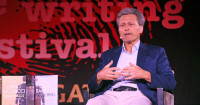
David Baldacci in Conversation at Theakston’s Old Peculier Crime Writing Festival
on-magazine.co.uk – Sunday August 2, 2026
He’s the superstar author with a movie star’s megawatt smile, a former lawyer whose novels have been translated into 45 different languages, selling around 130 million copies of them have been sold around the world.
Having had such success, coupled with his slick look, you might expect David Baldacci to be an over-confident, brash individual, but not a bit of it. Instead, he exudes old world charm and humility and, 30 years on from the publication of his first book, he remains as thrilled as ever by the writing process.
As a result, he was as pleased as punch to receive the Outstanding Contribution to Crime Fiction award at Harrogate’s Theakstons Old Peculier Crime Writing Festival on Thursday evening.
“It means everything,” he claims. “When I say that British crime writing is the gold standard, I really mean that. And being rewarded by your peers is an amazing thing. They know how the sausages are made and that they’re not always pretty!
“I’m just thrilled that we have 20,000 people attending a writing festival somewhere on the planet. That’s incredible. I’m going to go home and tell everyone about it.”
It’s not his first visit to the event – that came in 2011, but it was a whole different ballgame back then: “There were no tents, that I can tell you. There were still thousands of people, but nothing like this.”

The publishing world has rolled out the red carpet for one type of hatred
jewishnews.co.uk – Thursday July 30, 2026
While Jews - both Israelis and those in the diaspora - are shunned, authors whose virulent bigotry is unvarnished are feted
It was 2.45am when I saw the tweet. I was blearily making my way home from the public shelter after Iran’s latest barrage during the twelve-day war when I read the words: “You spend years thinking you needed therapy but, as it turns out, what you really needed was to watch Tel Aviv burn.”
Not much shocks me anymore, but this was a tweet from Susan Abulhawa, author of Mornings in Jenin, a mainstream author whose work a client of mine had acquired for publication in a European country just two weeks earlier. I am a literary scout, originally from London, based in Tel Aviv for the past eight years, and I advise clients in fifteen countries of the most exciting forthcoming books to acquire for translation.
I immediately attached a screenshot and emailed it to the client with the subject line “Hate Speech”, expecting a horrified, or at the very least mortified, response, and assuming the contract would be swiftly cancelled. This kind of behaviour is not tolerated in the genteel world of publishing.
Instead, I was told that the tweet had either been deleted or must have been fake, that the client did not regret acquiring the book, and that while they were sorry for what I was experiencing in Israel, Netanyahu was to blame and it would be better for me to leave the country as soon as possible.
This from a client of twenty years, once among my most Israel-friendly publishers, from a country my ancestors had fled generations earlier, now telling me where I should go.
It should not really have shocked me that Abulhawa’s tweets are hateful and antisemitic; a quick glance at the rest of her X account confirms that her tweets would not look out of place in Mein Kampf.

More Typos, Fewer Em Dashes: Writers Are Creating an Anti-AI ‘Literary Counterculture’
wired.com – Wednesday July 29, 2026
Novelists, journalists, and power LinkedIn posters are embracing first-person narratives and idiosyncrasies to avoid being mistaken for chatbots.
Last year, when the novelist Laura Brooke Robson began writing Love Is an Algorithm—a love story between the cofounder of an AI dating app and a musician trying to survive in the age of large language models—she took extra care not to sound like AI herself.
She wrote sentences she doubts she would have attempted before the advent of LLMs, avoiding what she calls “wishy-washy metaphors,” and took “a more winding path to avoid an em dash or a tripartite list.”
Since the widespread adoption of LLMs, Robson says her writing has fundamentally changed for the better, becoming a deliberate inverse of what she sees as AI’s default lack of style.
“I find myself writing less mechanically,” she says. “I have this urge to make little mistakes, like winks to the reader, to show that there’s a human behind the words. Like: What if I just invented a phrase? What if I did something unexpected with my punctuation?”
Robson is part of a larger cohort of writers who are practicing what could be called an anti-AI writing style. Across journalism, criticism, creative writing, and especially among compulsive LinkedIn posters, writers are converging on a set of choices that implicitly resist the trappings of AI-generated prose.
The style mostly takes shape through negation, often of the obvious AI tells, like lists of three, passive voice, not x but y, and em dashes. But it also prizes idiosyncrasy as its overriding principle, tapping into specific first-person anecdotes and eccentric similes that demonstrate the necessary drudgery of writing.
Agent Business Models May Be Shifting: What I Fear Will Happen
janefriedman.com – Wednesday July 29, 2026
However you measure it, I find more literary agents operating today than in decades prior. The Guide to Literary Agents directory, published since 1995, started with about 400 listings. The most recent edition, released in 2021, had about 1,000. According to my own reporting, the number of new agents announced per year in 2023, 2024, and 2025 was at least double the number announced in 2022. If you look at the number of contacts in Publishers Marketplace that carry the agent label, there are more than 3,000, although not all of them have reported deals. The number of Publishers Marketplace editors? About 3,800.
What’s driving the increase? It’s probably some combination of the following: Anyone can and does call themselves an agent, more people are agenting as a side gig, and consolidation among major and mid-size publishers has led some industry professionals to take up agenting. For career agents who’ve been in the business for the last couple decades or more, this is probably not a welcome development. It increases competition and creates more submissions for editors to sift through; for years now, agents and authors alike have complained of increased editorial response times. Some part of that is due to increased workloads for editors, but reportedly they’re also getting more material to consider. Longtime agent Kristin Nelson cited this as one reason agenting is harder today, and the situation is not improving.
The surest sign the profession is under pressure: changes at the Association of American Literary Agents. In 2022, the AALA loosened membership requirements. Prior to that year, membership required selling at least 10 books in an 18-month period. Now, anyone working in the field of author care at a literary agency can join. This isn’t in and of itself a bad thing—the organization is moving toward a more equitable and inclusive membership. But it definitely attracts more members unlikely to make a living by selling books.

Is This What Comes After AI Slop?
theatlantic.com – Tuesday July 28, 2026
Daggermouth could be the first best-selling novel partly written by a chatbot.
Most self-published authors can only dream of writing something as popular as Daggermouth. Set in a surveillance state ruled by a masked elite, the novel traces the unlikely romance between the president’s son and an assassin hired to kill him. Since H. M. Wolfe uploaded Daggermouth to Amazon as a Kindle ebook, it has been a viral hit. “Did I finish Daggermouth, or did Daggermouth finish me?” a TikTok book influencer gushed. In February, Simon & Schuster paid seven figures to secure the publishing rights to the book and its sequel, which is due out next year.
Daggermouth has spent months on USA Today’s best-seller list and is ranked No. 1 in Amazon’s “science-fiction romance” genre. It also tops a less prestigious list, one compiled by academics studying AI writing. Among thousands of self-published Amazon ebooks that they identified as containing “substantial AI text,” none was more popular than Daggermouth.
Until recently, AI fiction has been easy to dismiss as slop. On Amazon, new-book releases nearly tripled from 2022 to 2025. (That’s probably not because humans suddenly dedicated themselves en masse to the written word.) Many are blatant copycats of existing titles, seemingly intended to trick readers into buying them. Their sales figures are generally meager; the reviews, indignant. A suspicious number of them feature protagonists with the same names. Last year, readers of one fantasy novel noticed a line that seemed to be responding to a prompt asking a chatbot to write in the style of another author. But if a book as beloved as Daggermouth were written with a chatbot, it would raise an awkward question: Could AI fiction be getting … good?
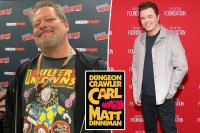
‘Dungeon Crawler Carl’ author on how he went from self publishing to New York Times bestseller who is developing a TV adaptation with Seth MacFarlane
pagesix.com – Sunday July 26, 2026
It takes a lot of work to be an overnight success, and nobody knows that more than Matt Dinniman, author of the massively popular “Dungeon Crawler Carl” series of books that’s sold a whopping 13.5 million copies.
“I’ve been writing since I was a kid. My first book came out way back in 2003. It was published with a small press. Back then, you didn’t self-publish because if you did, it meant you weren’t good enough. That stigma still exists,” Dinniman tells Page Six Hollywood during a brief respite from his packed schedule at San Diego Comic-Con.
He finally caught the self-publishing bug in 2017, releasing “Dominion of Blades” in the lesser-known (at the time, at least) Literary Role-Playing Game (LitRPG) genre. In the years that followed, he made a living selling drawings of cats and dogs at conventions (he attended 42 of them in 2019 alone). When those cons took a hiatus in 2020 due to the pandemic, he decided to get serious about his next project: “Dungeon Crawler Carl.”

How to Get Your Book Published: 5 Takeaways from You Are A Writer
pen.org – Friday July 24, 2026
For the final installment of You Are A Writer, PEN America’s workshop series for early-career writers, four industry experts delved into how a book makes its way from a writer’s hands onto shelves. They discussed what agents, editors, and publicists are looking for in proposals and manuscripts, how writers can find the right path for their book’s publication, and why they should never quit their day jobs. Scroll down to read five takeaways from the discussion.
Moderated by Sarah Bowlin, a senior literary agent at Aevitas Creative Management, the session featured Juli Kiyan, editor and associate director of publicity at Penguin Press, Kate Gale, co-founder and managing editor of Red Hen Press, and Liz Garriga, senior director of publicity at Little, Brown.
If you missed them, catch up on the earlier sessions of You Are A Writer.
1. Sweep readers off their feet with your manuscript.
Kicking off the session, Bowlin asked the panelists what they’re looking for in any given submission. Kiyan responded that when it comes to fiction, the writing needs to leap off of the page and wow readers.
Garriga agreed. “Really, it’s just about an immersive reading experience,” she said. “So that’s the good news there: You just have to enchant someone with the writing.”
Later, Bowlin stressed that you should contact agents only once you have a complete (and thoroughly edited) manuscript. “My dad had the very cheesy [saying], ‘You only get one chance at a first impression,’ but it is true in the sense that I have 700 unread novels in my inbox right now and the only way that I get through that material is for something to really stand out,” she said.
Get the free newsletter | Submit a news item or article | Get Writers' News for your website