



Why writing diverse children's books is tough
theguardian.com – Tuesday April 12, 2016
What’s the point of having another shoddily-realised feisty girl or two-dimensional token wheelchair sidekick to add to the massive pile of rubbish attempts at diversity? Author Ross Montgomery on why it’s hard to write diverse – but that’s no excuse not to.
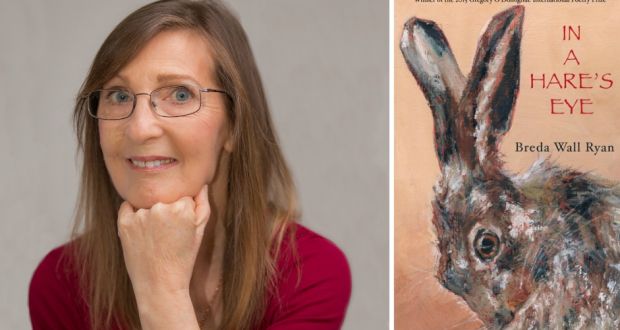
Breda Wall Ryan on writing In a Hare’s Eye
irishtimes.com – Wednesday April 6, 2016
When judge Kevin Barry announced my debut poetry collection, In a Hare’s Eye (Doire Press 2015), as the winner of this year’s Shine/Strong Poetry Award at Mountains to Sea dlr Book Festival, it marked a new milestone on my poetry journey, a journey begun in childhood. Poetry came to me first at the ear. My mother used to recite narrative poems to us as bedtime stories and I was captivated by their rhymes and rhythms. I can still recite swathes of poetry I learned on the cusp of sleep, that tipping point between the conscious and the unconscious. The marvellous imagery and skewed logic of dreams is one of the places my poems are born. If I held a sure key to that otherworld of the unconscious, I’d go there more often, to bring back embryonic poems. One strand of my poetry explores the borders between the real and surreal, between acquired and personal mythologies. A second strand concerns nature, the environment, and our human mistreatment of the earth.

Let It Go! Improve Your Writing and Free Yourself From Attachment
huffingtonpost.com – Monday April 4, 2016
In writing and in life, it behooves us to remain as free from attachment as possible. Now, you may immediately wonder, “What does that mean? Especially when it comes to writing?!”
Here are a few thoughts to consider. It’s not uncommon for writers to occasionally get attached to certain words, phrases or passages, which inevitably feel essential to getting our message or story across. The problem with such “attachment” is we find ourselves disappointed when we’re told (by editors or agents or publishers or readers), “That part didn’t really work for me.”

The Book Inside You: The Business Of Selling It
boston.cbslocal.com – Thursday March 31, 2016
There is inherent passion in the written word, but there is also the business of selling it.
Enter Esmond Harmsworth, a founding partner of Zachary Shuster Harmsworth Literary Agency, which has offices in Boston and New York. He says every agency has a common ingredient – “You have to insanely love books.”
Harmsworth reads at least one full-length book a week, and the first 20 pages of another ten. He generally makes a quick decision.
Writing Sci-Fi? First Understand How Elephants Aren't Dragonflies (Op-Ed)
space.com – Saturday March 26, 2016
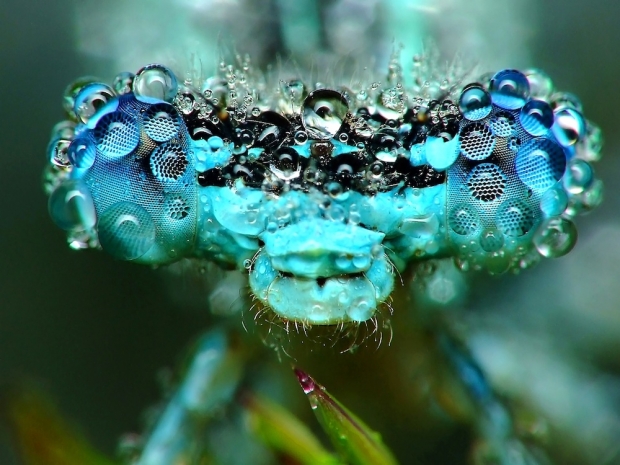
Animals come in all different sizes, but the laws of physics mean that you can't just arbitrarily scale up a dragonfly to the size of an elephant and expect the body plan to result in a functioning creature.
For one thing, mass increases much faster than other qualities like strength or surface area as you scale up a body, and so the legs and wings of an elephant-size dragonfly would have to be proportionately much larger to support the extra weight — and it's doubtful muscle power could be sufficient to propel such a creature into flight.
Moreover, insects are generally small because they rely on diffusion to distribute oxygen to interior cells instead of the active oxygen-pumping systems found in animals like mammals. This imposes an upper limit on just how big an insect can get. It's true that there were gigantic dragonflies — still not the size of elephants, however — during the Carboniferous period (as well as housecat-size cockroaches and other horrors), but the oxygen level in the atmosphere at the time was much higher, and that likely played a role in making such bodies viable.
Let's pause for a moment and give thanks for the fact that we don't have to live in a world of pet-size cockroaches and meter-long scorpions.
All of this presents an analogy for fiction. It's tempting to think of novels (the elephants) as scaled-up short stories, or short stories (the dragonflies) as miniaturized novels. But having written both 100-word drabbles as well as 200,000-word epic fantasies, I can assure you that's not the case.
The Impossible Task of Writing Historical Fiction
publishersweekly.com – Friday March 25, 2016
Kelly Kerney's outstanding novel Hard Red Spring spans the entire 20th century in Guatemala's history through four vivid voices. Kerney, who spent a decade writing the book, talks about the difficult task of fictionalizing the past.

Writing Should Be Fun
huffingtonpost.com – Tuesday March 22, 2016
Yes, writing should be fun, and for most writers - even those writers who complain about writer’s block, and who claim they like having written more than writing, and who say writing is like sitting at a desk until blood comes out of your forehead - writing is fun. They just don’t recognize the fun when it’s happening. That’s because writers are overwhelmingly adults, and fun is what adults get to have when they’re done doing their important adult work.

10 Struggles All Creative Writing Majors Understand
bustle.com – Sunday March 20, 2016
I have a degree in creative writing. And I'm pretty sure they won't refund me if I try to return it. So I have chosen to be proud of my degree. When I tell people that I majored in creative writing, though, I usually get a response that ranges from sympathy to out and out horror. People want to know why my parents allowed me, their only child, to throw away my future on a creative writing degree (but my parents are both professional actors, so they actually think of writing as a very solid and employable career path).
Selling Your Writing To Boating Magazines
cruisingworld.com – Thursday March 17, 2016
In kindergarten I was tasked with making a shoebox diorama that showed me engaged in my future vocation. The little cardboard me I cut out wasn't playing a professional sport or fighting a fire or walking on the Moon. Instead, Mini Me sat solo in the empty Vans shoebox, in a tiny cardboard chair, behind a tiny cardboard table, in front of a tiny cardboard typewriter. It wasn't a dream I chased very far. At some point growing up I was dissuaded by pragmatism. Having learned that I stood the same chances of becoming a successful writer as my kindergarten classmates did becoming a professional baseball player, I steered clear of ever being caught playing the dreamer.
4 Actionable Ways to Overcome Writer's Block
entrepreneur.com – Thursday March 17, 2016
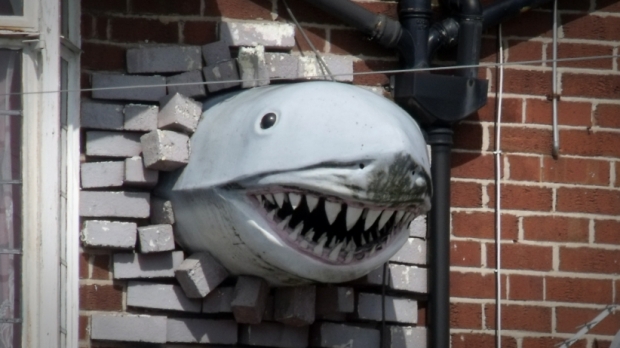
Have you ever sat down to write and then . . . just sat there, not getting anything down? Whether you are trying to write a book, blog post or something entirely different, writer’s block is a real thing that will not only bring your progress to a grinding halt but will piss you off in the process.
Get the free newsletter | Submit a news item or article | Get Writers' News for your website