


Looking to Write for a Fathers Magazine? Here’s Why The Good Men Project Is the Modern Home for Fatherhood Stories
goodmenproject.com – Tuesday December 2, 2025
When someone Googles write for fathers magazine, they’re looking for a place where stories about fatherhood — real, vulnerable, meaningful stories — will be embraced.
Traditional magazines have shrunk. Many no longer publish fatherhood content. But fathers haven’t stopped needing representation. Their challenges have simply evolved.
That’s why The Good Men Project continues to be one of the strongest platforms for fatherhood writing anywhere online — with hundreds of fatherhood articles read every month.
Why GMP Is a Natural Fit for Fatherhood Writers
1. We’ve Published Over 10,000 Authors Since 2010
Fathers writing about parenting, co-parenting, blended families, mental health and masculinity have long found a home here.
2. Our Reader Base Is Hungry for Real Fatherhood Insights
Articles on discipline, emotional intelligence, divorce, raising boys, raising girls and family dynamics consistently perform well.
3. Your Writing Helps Other Men Feel Seen
This is a mission. Not just content.

Jupiter Phaeton, the self-publishing powerhouse rewriting the rules of fantasy fiction
euractiv.com – Friday November 28, 2025
When Jupiter Phaeton quit her job in France with just six months’ savings, she faced a stark choice: make a living from writing or return to the nine-to-five grind. “Going back to traditional jobs was Plan B. But the most horrible Plan B for me. It was out of the question,” she says.
Today, that gamble looks prescient. Phaeton has published more than 60 fantasy novels on Amazon, selling over 190,000 eBooks and 55,000 print copies, with 645,000 reads via Kindle Select and 135,000 audiobook listeners. Her success is not just literary; it is entrepreneurial.
“It’s entrepreneurship,” she insists. “You’re not just selling your product or building your products; you have to learn about accounting, marketing, and how the publishing industry works.”
Building a loyal readership at speed
Phaeton’s books brim with magic, dragons and werewolves, but her real magic trick was speed. “Kindle readers are heavy readers,” she explains. “They read books like you’ve just published it, and five hours later, like, where is the next one?” To meet that demand, she published a book a month for a time. “That’s why we built such a great community first,” she says. “Now I can stop being chained to my keyboard.”
Her characters are often strong women – a deliberate choice. “I wanted to inspire women, to say to them, ‘Hey, it’s okay. You can have a strong character, and you can lead and do whatever you want in life.’”

A troubling question has been raised around human authors vs AI
independent.co.uk – Friday November 21, 2025
More than half of the UK’s published novelists agree that it’s likely artificial intelligence will displace their work entirely, prompting fears of a two-tier market in the literary world where only the rich can afford author-penned books. What on earth does that mean? asks Annabel Nugent
On the morning the truth began to unstitch itself, Leonard felt a faint, traitorous thrill, as if the world had agreed to tilt a fraction in his favour.
If you’re thinking, well that sounds a lot like the opening sentence of a new Ian McEwan novel, you would be half-right. Rather it is a sentence written in the style of Ian McEwan, as generated by a free-to-use artificial intelligence platform. Admittedly, the prose is a little too florid for an author who wields his pen more like a scalpel. And yet on the surface and to your average reader, it’s a passable approximation of his work.
You can understand why, according to a new study by Cambridge University, more than half of published novelists in the UK agree that it’s likely AI will displace their work entirely. This isn’t anything new: for months if not years, novelists have expressed their growing unease about the speed and scale of AI’s trespass into the literary world. Plug in a prompt for any author with a back catalogue and you’ll get a sort-of satisfactory imitation of their writing: Margaret Atwood, Stephen King, Sarah Maas, Haruki Murakami, etc, etc. Not only does this happen in a matter of seconds, but it’s completely free. A whole book, 10 books, 100 books, 1,000 books for a grand total of £0.
Obviously, there are myriad problems with this – not least the financial repercussions on authors and the theft of their intellectual property – but one particularly troubling question was raised by Dr Clementine Collett, the lead researcher and author of the Cambridge report and a novelist herself: Could the prevalence of AI-generated novels create a two-tier system in the literary world? “That is a real concern from literary creatives,” she said on Thursday’s episode of Radio 4’s Today programme. “Where human-written work will be a more expensive luxury item, and AI-generated content will be cheap or free.”
Admittedly, the idea that everyone but the rich will be doomed to a black hole library full of fake books, bereft of human thought, feeling and heart feels a little far-fetched. But so too have many things that have come to fruition in recent months: the prevalence of AI relationships, the AI-facilitated mediums for grief counselling. Concepts that once seemed so Black Mirror are on the fast track to becoming run of the mill.
Why Every Bestseller Feels the Same: the Formula Behind Modern Romance
theteenmagazine.com – Saturday November 15, 2025
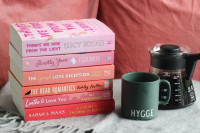
One thing about romance novels is that they're going to hit every time! Well, at least they used to. The swoon-worthy confessions, the character edits on TikTok, the yearning, and cute scenes that made us all feel lonely.
From fake dating to the same three tropes on rotations, romance novels have become predictable. However, authors are relying on this predictability because it sells. It causes authors to play it safe and adds no depth to the genre.
It is no secret that the same copy-and-paste format has a little or a lot to do with the business behind the publishing industry. Literary agents are always looking for the next big thing, the story that will make them revenue and not just dust up on library shelves.
It’s why one of the key things that agents look for in an author is numbers, such as how many followers they have or their network. This is a major factor in the stories and authors that get published, which then leads to literary agents now picking the same type of storylines and similar authors to the point the whole market is overusing the same ideas.
BFLA Open Week: What is the most challenging part of your role?
blakefriedmann.co.uk – Thursday November 13, 2025
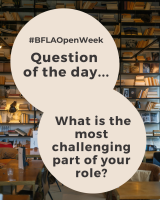
While we love to celebrate the publishing industry – amazing authors, essential books, and a whole world full of readers – sometimes it can feel like an uphill battle. In today’s BFLA Open Week Question of the Day, we asked the team:
What is the most challenging part of your role?
Please take a look at everyone’s answers below, and come back tomorrow for the final instalment of this year’s Open Week!
Isobel Dixon, Head of Books
Agenting requires a great deal of intelligent nerve, in fighting for your authors, in tricky negotiations, and the mettle required to deliver bad news – rejected submissions, editor departures, frustrating reviews (or lack of them). The trade’s rate of change is swifter than ever before – editor moves, corporate mergers, retailer shifts – and we are the steady point for our clients, supporting and strategising in response to perpetual publishing flux. Physical stamina is required too as we don’t control publishing schedules – several client titles can be published on one day and we have to be prepared and there for each unique scenario.
Inside the editorial process of Chapman’s art and literary magazines
thepanthernewspaper.org – Monday November 10, 2025
From poets to music producers, painters to playwrights, filmmakers to photographers, Chapman is home to a thriving creative community. And each semester, art and literary magazines like Calliope, Ouroboros and The Underground offer Chapman creatives of all mediums a home for their work.
But how do the editors of these magazines decide which pieces to accept into each issue? Let’s delve behind-the-scenes into the selection and editing process for Chapman’s art and literary publications.
Calliope, the oldest literary magazine at Chapman, published its first issue as its current iteration in fall of 2014. The publication accepts a wide range of written and visual work, including poetry, fiction, nonfiction, scripts, photography, digital art, paintings and drawings. Currently, Calliope’s editor-in-chief is senior screenwriting major Joshua Olatunji.
Ouroboros, which published its first issue in fall of 2020, specializes in work that falls within the speculative genre. The magazine accepts written and visual works of various mediums including poetry, fiction, scripts, sculptures, animations, photography, digital and traditional art. The magazine’s current editor-in-chief is junior creative writing major Selah Sanchez.
The Stephen King writing tip that changed everything for Aussie thrill-master Christian White
rnz.co.nz – Sunday November 9, 2025
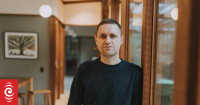
Best-selling novelist Christian White was resigned to being a "starving artist" forever. Then he read Stephen King's non-fiction book On Writing.
Over 15 years, in the spare hours when he wasn't selling sandwiches from a golf cart, picking apples or editing adult films, Christian White penned four books that never saw the light of day.
He and his wife, Summer De Roche, were resigned to being "starving artists forever" when White read American horror master Stephen King's "incredible" book On Writing.
In it, King delivers "incredible nuggets of wisdom", White says, and one in particular - that you should write with the door closed and rewrite with the door open - paved the way for his best-selling debut novel, The Nowhere Child.
In 2018, when The Nowhere Child became the fastest-selling Australian debut novel in history, White says all of a sudden, his entire life "did this complete 180".
"I'd wasted 10, 15 years of writing and not showing anyone else my work. That big change pretty much straightaway led to me getting a publishing deal and everything else so, I really owe that book a lot."
"Suddenly, I could afford to just sit at my desk all day. That was my one thing I had to do. I could write for a living. It's the best job in the cave-like office all day, away from the sunlight, just telling stories. It's amazing."
Once "the dust settled", though, White realised that even with the extra hours, his writing output was still the same as it had been while he was juggling casual jobs.
Splinter Journal Navigates the Muck and Mire of Literature
tobemagazine.com.au – Monday November 3, 2025
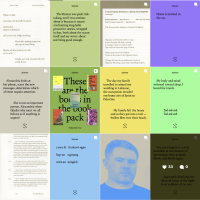
Splinter Journal is an Adelaide-based publication that features the literary work of Australian and international writers. Published bi-annually, it showcases a variety of written forms, such as fiction, essays, and poetry. We spoke to the editor, Farrin Foster, about her involvement with Splinter and the vision behind the journal.
DANIEL DRAZETIC Can you tell us a little bit about the ethos behind Splinter and how the platform is being used by writers across Australia and overseas?
FARRIN FOSTER Splinter was devised as a way to knit together the writing scenes in South Australia and those across the rest of the country and the world. There has been a great online literary journal in Tarntanya called The Saltbush Review, but it’s been a long time since we’ve had a print journal made here.
I think, counter-intuitively, that print has the capacity to make deeper connections (although maybe not wider ones) than online (not that I’m anti-internet; I doomscroll and read online as much as the next elder millennial). But readers connect with writers in a different way in print, and for the kind of writing we are publishing in Splinter – which is absurd, emotional, funny, and often also kind of devastating – that connection is important. I think Splinter is a vehicle for new writing by SA writers to be seen alongside the best writing from around the world. We are about connecting and representing writers in our home state, but we’re not parochial – we publish writers from everywhere.

The making of Death Kit and the importance of print: In conversation with editor Joe Coward
theboar.org – Sunday November 2, 2025
“Print is essential – it’s what people want.”
On October 28, I was lucky enough to speak with editor Joe Coward to discuss the founding – and thriving – of London’s new small press literary magazine, Death Kit. At only four pounds a copy, Death Kit situates itself proudly as one of the most accessible lit mags in town. We covered what it takes to bring a literary magazine to life, the importance of print in an online age, and the future of the magazine-come-community that is Death Kit. Here’s the rundown:
Even the naming of the mag signals that Death Kit is publishing work that “turns away from trends”
Where did the name come from? The striking name comes from the Susan Sontag novel. Coward mentions Vanity Fair as another magazine that takes its title from literature, but even the naming of the mag signals that Death Kit is publishing work that “turns away from trends.” Unbothered by pop-culture, you can be sure to find writing that’s unapologetically strange.
How did it begin? The project that was born out of “boredom” is now six months old and is celebrating the release of its second issue this October. With accessibility at the forefront, Coward emphasised the importance of being willing to invest what you can, in order for the magazine to find itself in as many hands as possible. The team is small, with as little as two regular editors and two feature-writers: “all quite unofficial,” but successful nonetheless.

Finding Your Writing Flow After NaNoWriMo
sfwa.org – Thursday October 30, 2025
When November approaches, writers everywhere feel it—that itch in our fingers, the spark of imagination, the pull to tell stories. For years, we channeled that energy during National Novel Writing Month (NaNoWriMo), an annual challenge to draft 50,000 words of a novel in 30 days. Founded in 1999 and formalized as a nonprofit in 2006, NaNoWriMo inspired millions, building a global movement around storytelling.
But by 2025, financial troubles, governance failures, and controversies—including mishandled child endangerment complaints and the decision to allow AI-generated works—eroded trust. The organization ultimately shut down, leaving behind a void in the writing community.
Like many, I missed the structure and momentum NaNoWriMo once offered. Over the summer, I found myself yearning for it to rise from the dead as I stared at a neglected draft of 10,000 words I’d written a year earlier. Without NaNoWriMo to lean on, I wondered: Was there another challenge or tool that could help me get my writing groove back?
Get the free newsletter | Submit a news item or article | Get Writers' News for your website