

Don’t like the way you write? An artificial intelligence app promises to polish your prose
qz.com – Friday March 10, 2017
I am a professional writer, but I often hate my writing. I wish it was more concise and powerful. And it certainly doesn’t read as smoothly as the work of my literary heroes. Recently, I began to wonder: Could a software program make me better at my job?
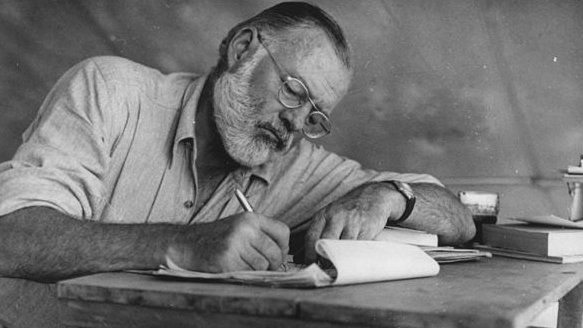
The Hemingway App, an online writing editor created in 2013 by brothers Adam and Ben Long, promises to do just that. “Hemingway makes your writing bold and clear,” the site claims, so that “your reader will focus on your message, not your prose.” If you listen to the app’s advice, it will rid your writing of run-on sentences, needless adverbs, passive voice, and opaque words. There’s no guarantee you’ll crank out the next Farewell to Arms—but the goal is to get you closer to Ernest Hemingway’s clear, minimalist style.

Learning to code can transform your writing, not just your website
thebookseller.com – Tuesday March 7, 2017
I came to coding like a mute. When I went to a conference presenting a new coding language from Google called Go last month, I realised I couldn't understand what was being said. Later I met with Inês Teles, director of London coding bootcamp Founders & Coders, curious to learn how coding could push my own writing project. But I couldn't explain my ideas as my language wouldn't translate into hers.
“What do you want to do with it?” A simple question I was unable to answer. However, I was told that, if you know how to write code, you can pretty much do anything. So I went along and started learning the basics of web development, starting with HTML and CSS. Little did I realise just how much learning code would teach me about language of the other kind.
The 10 Best Interlinked Short Story Collections
publishersweekly.com – Saturday March 4, 2017
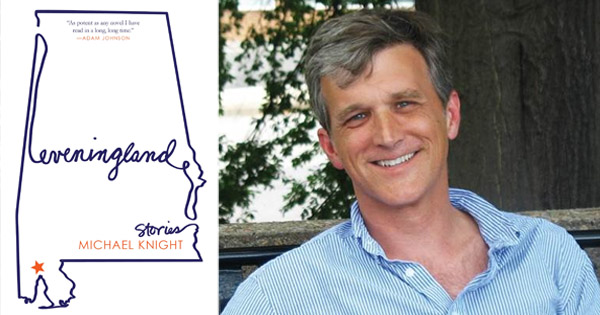
The interconnected stories in Knight's exquisitely crafted collection Eveningland explore the lives of characters living in and around Mobile, Ala., in the years preceding the destruction wrought by a fictional hurricane. Funny, wise, and heartfelt, the stories stand on their own, but also add up to a stunning whole. Here are Knight's picks for 10 interlinked short story collections.

Writing Issues: Advice I Give: Patrick O’Neil
huffingtonpost.com – Friday February 24, 2017
Patrick O’Neil is the author of the memoir Gun, Needle, Spoon (Dzanc Books). His writing has appeared in numerous publications, including Juxtapoz, Salon, The Nervous Breakdown, After Party Magazine, and Razorcake. O’Neil is a contributing editor for Sensitive Skin Magazine, a Pushcart nominee, a two time nominee for Best Of The Net, and a PEN Center USA Professional and former Mentor. In today’s “Writing Issues,” I asked him what advice he would give aspiring authors.

Transparency, targeting, Twitter: what it means to be a literary agent now
thebookseller.com – Monday February 20, 2017
When I first worked in agenting, all submissions from authors were sent in hard copy: towering piles of envelopes containing the first 50 pages with SAEs enclosed for rejection slips. Indeed, many agents still submitted to publishers that way, biking the printed copy round to their offices and waiting for the offer to come in. In those days the book fairs really were where you could get your hands on a hot book – literally – coming to the agent’s table to physically read a proposal before putting an offer in.

7 Details to Consider When Writing Historical Fiction
authorlink.com – Wednesday February 1, 2017
I’ve always considered myself a history buff and have written quite a few historical fiction novels requiring exhaustive amounts of research. Creating believable historical fiction means getting facts straight and making sure that your research and imaginative input inspires the most plausible, complex plots and characters you can possibly bring to life. Here I lay out the top 7 components you need to think about when writing historical fiction.
On writing women
dawn.com – Sunday January 22, 2017
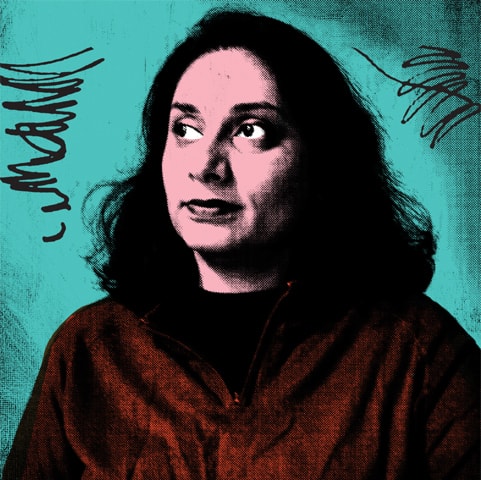
In researching my previous column on the work of Elena Ferrante, I read how certain critics were convinced that the author was actually a man writing under a woman’s pseudonym because she wrote assertively and confidently about the domains of men, especially politics, crime, and violence. In return, Ferrante’s supporters asserted that not only could a woman write well about these domains, but that “only a woman” could know of the secret interior worlds of women and write about them as truthfully and authentically as Ferrante.
Self-Publishing in 2017: The Year in Preview
publishersweekly.com – Saturday January 21, 2017
As 2017 begins, indie authors and publishers are having to navigate a fast-growing industry filled with new opportunities, but one that also presents challenges related to that expansion. To find continued success in self-publishing, it has become more important to expand the definition of “self-published author” to encompass new roles and new formats.
Next Steps in Digitization for Book Publishers
publishersweekly.com – Saturday January 21, 2017
In this inaugural column, I’ve been asked to offer up some predictions for digitization in publishing in 2017. The problems—and solutions—of digitization are more complex than the question of e-books vs. print books. By and large, that divide has stabilized; print books are clearly still a strong part of the market, and e-books have their attributes (instantaneous purchase, no bundles to lug around, changeable font size).
The five-step manufacturing process that could make you a better writer
theconversation.com – Monday January 16, 2017
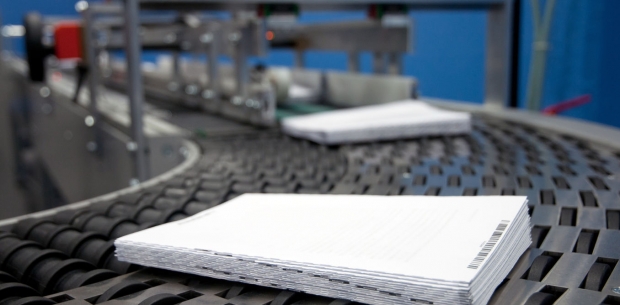
If you want to be a better, faster writer, you should treat your writing as a lean manufacturing process. “Lean” is an engineering technique for making manufacturing less wasteful and has been used in industrial production for decades. Today it has spread to sectors from software development to customer services. But I’ve found the principles of lean can even help improve the practice of writing, whether you’re producing a report or a novel.
Lean was developed from Japanese manufacturing ideas in the 1980s and 1990s. It involves applying five principles to minimise waste and increase productivity: flow, value, waste, pull and perfection. The key goals in lean manufacturing are to learn and continually improve. For writing, we have to first start with a finished piece of work in order to get feedback. Then we can start to apply the circular lean process and principles.
Get the free newsletter | Submit a news item or article | Get Writers' News for your website