



Is there a secret to writing a bestselling book?
smh.com.au – Friday May 13, 2022
How do I write thee? Let me count the ways … no, there are too many to count. Every writer has made their own journey, and no two are quite alike. So how can you possibly teach anyone how to write, say, a novel?
Despite the difficulties, there have probably never been so many writing courses and guides on offer, and people eager to take them up. Two of the latest books by Australian writers are perfect illustrations of how different writing advice can be. Both are eminently absorbing, encouraging and inspiring for the novice. In other ways, they are poles apart.

Don Winslow: The Complicated Ethics of Writing Violence in Fiction
time.com – Wednesday April 27, 2022
There are some hard ethical questions in the writing of crime fiction.
For me, the most difficult one is how to portray violence.
For one thing, should you depict it all?
And if so, how do you do it with some sense of morality?
I wrestle with this issue all the time. It’s a fine line to walk. On the one hand I don’t want to sanitize violence—I don’t like presenting murder as a parlor game, or worse, a video game in which there are no real consequences. On the other hand, I don’t want to cross that thin line into what might be called the pornography of violence, a means to merely titillate the worst angels of our nature.
The 25 best podcasts for writers
mashable.com – Monday April 25, 2022
Audio can be a bit of a contentious subject among written word lovers. But we're not here to re-litigate the age-old debate over whether listening to audiobooks counts as "reading" (it does, by the way).
Writing can be a lonely profession (or currently unpaid passion, until it can become your profession). But podcasts can bring listeners a sense of community no matter how isolated they are in their interests, both emotionally or geographically. As the illustrious history of famous literary circles goes to show, it often takes a village to produce the singular creative geniuses of an era.
So for established authors or amateur creative writers with big aspirations alike, there's a lot to be gained from the virtual book clubs and writer communities behind the podcasts listed below. Whether you're looking for guidance on the writing process, seeking to learn the fundamentals of great literature or about the publishing industry, or looking for muses to refill your well of inspiration, we've got you covered. From fiction to memoir, screenwriting to playwriting, and prose to poetry, there's an endless world of audio storytellers just waiting to fill your ears with the written word.

On Writing a Social Novel, Giving Clear Feedback, and Outlasting Doubt
lithub.com – Wednesday April 20, 2022
I met Melissa Chadburn in 2011, at the Tin House Writer’s Conference, where I taught her in workshop. You already know that I’m going to tell you that she was brilliant and kind and funny, even back then, so I’ll skip to the part where I get really stoned.
This happened on the final night, when the poet D.A. Powell (bless his soul) proffered me hits off a blunt the size of a drumstick. At some point, I passed along to Melissa the little secret I had been saving for just such an occasion: the Croatian publisher of my debut story collection (“My Life in Heavy Metal”) had—after much anguished consideration—come up with a title that would capture the essence of my work for her readers: Sexburger U.S.A.
Oh my god, did we laugh.
Over the next five years, Melissa did two things for which I am still grateful. First, she took to calling me as Sexburger. Second, she sent me various drafts of her novel for review, absorbing, in the process, some pretty blunt feedback.

Ocean Vuong on Taking the Time You Need to Write
lithub.com – Saturday April 9, 2022
The Japanese have this idea of the color of a poem. Bashō talks often about the colors of poems. I think what he means by that is the moods and the tones, the sort of aesthetic principles of them. And I think that you can’t just sit down and write that, you have to really embody it. That’s the hardest part: figuring out what tone or what mood you’re writing towards. A lot of this has to do with the themes you’re working with, or the mode that you want to present. That takes sometimes weeks, months — years, really — to develop before language comes to fruition. Language has its own register, like music, and depending on the “octave” or the tone that you’re using, there are connotations, there are meanings, implicit in tone.

Think you can write a book? Here’s how to pitch, publish and push your career
nypost.com – Monday April 4, 2022
Everyone dreams of being an author. The pandemic has inspired many to start on these long-dormant passion projects. Or maybe just toy around with the idea but not, you know, take any tangible action in getting the proverbial pen to paper.
First, the good news: “If you want to write a book related to your career, this is a clear sign that you are ready to acknowledge your growth and achievement in life,” said J. L. Stermer, a literary agent who teaches “How to Get Published” at Gotham Writers Workshop, and is also president of Next Level Lit. “It means you have overcome challenges and found solutions that you are ready to share to help others on similar journeys. Your book establishes you as an expert in your field and can magnetize you to find new clients.”
It takes a lot of toil, but penning your own tome can help you get on panels, invited to podcasts and land speaking engagements.
Ahead, expert tips to go from a blank Google Doc to signing the title page.

How to start writing a novel – authors share how they did it
metro.co.uk – Thursday March 31, 2022
We’ve all got a novel in us. Or so the saying goes.
But for most people, even if you have the burning embers of an idea inside you – it can be hard to know where to start.
How do you find the time, the confidence, or the structure needed to actually put pen to paper, or fingers to keys, and actually start the process of writing your first novel.
Well – it can be done. Just look at all the books on your bookshelf or in your local bookshop. All of those authors were once beginners, and they all had to start somewhere.

Narrative Sleight-of-Hand: The Trick of Writing Multiple POVs
tor.com – Tuesday March 29, 2022
One of the traps I fall into most easily as a writer is the illusion that I know what I’m doing. I have a few novels under my belt, and have seen some success with them. Readers have occasionally marvelled at my artistry, or even proclaimed me wise. I, for one, am all too ready to believe the hype about myself.
That is, until I start writing a book that is too hard for me. Which is every book I write, somehow. I end up with two choices—abandon the hard book and write something easier, or abandon the notion that I have any idea what I’m doing.
I highly recommend the latter. It’s humbling, but frees me to look around and find help in unexpected places.
The Tricky Task of Writing a Villain
theatlantic.com – Sunday March 27, 2022
In literature, and in real life, many times the villain makes the story. But writing a nuanced account of these characters, whether in fiction or in nonfiction, can be tricky. In her book Putin’s People, Catherine Belton uncovers important details from Putin’s past and tells what we might consider his origin story. One evening in December 1989, after the fall of the Berlin Wall, a group of protesters started making its way to the KGB station in Dresden. Putin called for reinforcements, but none came. This was his turning point, Anne Applebaum writes, the moment that “marked the end of [the Soviet] empire and the beginning of an era of humiliation.” She describes his disdain for democracy as his answer to that “trauma,” but she’s clear that his success has “proved a terrible tragedy for the rest of the world.”
Pulitzer winner Anne Tyler on writing from black viewpoint: ‘I should be allowed to do it’
nypost.com – Tuesday March 22, 2022
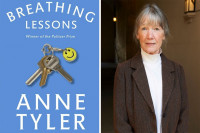
One of America’s most acclaimed authors is wading into the culture wars, saying she believes she should be able to create characters from a diverse range of backgrounds.
Anne Tyler, 80, spoke out on the issue in an interview with the Sunday Times, stating, “I’m astonished by the appropriation issue. It would be very foolish for me to write, let’s say, a novel from the viewpoint of a black man, but I think I should be allowed to do it.”
Tyler — who won the 1989 Pulitzer Prize for fiction for her novel “Breathing Lessons” — also hit out at cancel culture.
“If an incredibly talented person has written novels in the 1930s or ’40s and all of a sudden it is discovered that there was something he said or did — even something as bad as sexual harassment — he should be condemned for it but I don’t see why you should withdraw his novels from publication,” she told the British publication.
Get the free newsletter | Submit a news item or article | Get Writers' News for your website