


A Guide for Aspiring Authors
universityobserver.ie – Tuesday March 24, 2026
In order to be a writer, one must form a writing habit. Pick a dedicated time in your schedule where you write. It does not matter how long you write for or what time you select. The key is consistency. Building this habit requires you to take yourself, and your writing seriously.
I recently attended an event at Chapter’s Bookstore, hosted by the Romantic Novels Association, a professional body dedicated to raising the prestige of romantic fiction. At the event, the association’s chair and director, Seána Talbot, spoke about the importance of respecting your desire to write as much as your other commitments.
For students, this might look like setting deadlines for your writing goals just as you would with your assignments, or informing your roommates that you need some quiet time in the same way you do when you study.
Build a community:
It can be much easier to motivate yourself to do something when you belong to a group with the same interests or goals. If you are not in a literature or creative writing degree, this can be harder to find as a student. That said writing groups you can join as a student still exist.
UCD Lit Soc hosts regular writing sessions where students from all courses can come together to write and share their work with others. Volunteering with organisations such as Fighting Words also gives access to events with other writing and literature enthusiasts. This is a great way to meet people with the same interests and sometimes network with others from the industry.
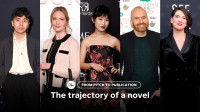
Can anyone get a book deal? What it takes to be a novelist in 2026
eu.usatoday.com – Sunday March 22, 2026
Consolidation, fewer imprints and editorial bottlenecks are reshaping how fiction book deals are acquired and developed in today’s publishing market.
“From Pitch to Publication” is a series taking readers behind the curtain of modern publishing as a business.
I’m so accustomed to rejection that I brace myself for every email – even before opening. Even when good news may be waiting after that click.
Writers, and all creatives to an extent, have to get accustomed to “no.”
About 81% of Americans feel that they have a book in them, according to an often cited survey reported in The New York Times (from the early 2000s). Many aspire to write and publish a book in their lifetime, but only a small fraction see their work formally acquired and announced each year. A little over 2,000 fiction writers announced deals in 2025 on Publishers Marketplace.
What's it like to write a bestseller? We followed Lucy Score for a year to find out
This year, one of those deals announced is mine: My debut young adult novel, “How to Kill a Chupacabras," was acquired by independent publisher Tiny Ghost Press. I almost dismissed the email confirming the offer as another rejection.

How to write your first children's book - meet the experts
knutsfordguardian.co.uk – Saturday March 21, 2026
Cheshire has produced generations of award-winning children’s authors, from Lewis Carroll to contemporary luminaries such as Alan Garner. Now, in World Book Day month, we discover what it takes to pen a hit for young readers.
For me, it’s Enid Blyton’s The Magic Faraway Tree. My daughters opt for Dame Lynley Dodd’s unlikely canine hero, Hairy Maclary. Friends and family suggest other titles – Shirley Hughes’ We’re Going on a Bear Hunt, Lauren Child’s Charlie and Lola, Julia Donaldson’s The Gruffalo, Jeff Kinney’s Diary of a Wimpy Kid, JK Rowling’s Harry Potter. They’re all stories that endure – enthralling and inspiring young readers and making indelible marks on fresh imaginations in a way fiction rarely does as we mature.
In Warrington, international best-selling author Curtis Jobling traces his success back to childhood inspirations.

One book after another: indie publisher Joffe Books continues to rise
thebookseller.com – Friday March 20, 2026
To enter Joffe Books’ office, one must first navigate several levels of a dark and dimly lit stairwell in a Shoreditch office block – a heart-racing endeavour in more ways than one. But on reaching it, a New York loft-style haven of light and space beckons. A more informal and talkative office atmosphere than some traditional publishers, there is a palpable sense of energy – perhaps aided by the smorgasbord of luxury chocolates in the kitchen. A permanent fixture, I am told.
I am here to speak with founder and chief executive officer Jasper Joffe and editorial director Rachel Slatter, not long after the indie made yet another acquisition, the Severn House list. This takes the imprint count to five, with turnover cresting £10m, Joffe says. Much of this is generated by the digital-first company’s e-books base, but print is growing, up 16% in 2025 to £231,000 through NielsenIQ BookScan.

Genre as Delight, Not Dictator: How Learning About Genres Helps You Write Better
janefriedman.com – Tuesday March 17, 2026
Jane recently wrote about the importance of not obsessing about arbitrary genres and subgenres, whether one is just beginning to write a book or struggling to pitch it. After all, genres (and categories) are the concerns of people selling books, not the people writing them.
Yes, but. Or should I say Yes, and?
As a multi-genre author of seven novels who jumped from literary historical fiction to the more commercial thriller category a few years ago—and sold more copies in the last two years than I’d sold in the previous ten—I want to share my view that genre does matter in ways that can be inspiring and instructional rather than limiting or vexing.
First, let me explain that I came to creative writing via literary fiction and the classics. I fed my late-blooming novelist’s mind with doses of Virginia Woolf, Philip Roth, and Ian McEwan. My debut historical novel was modeled on Don Quixote.
This high-brow literary focus taught me useful things about voice, theme, and the evolution of the novel as a form, which I passed on to my students once I became an MFA instructor. What it didn’t always teach me or my students effectively was how to plot. Or even about how to develop characters, in that I gravitated toward characters who were opaque, passive, and generally inaccessible. While my friends were reading Fifty Shades of Grey, I was thoroughly enjoying Of Human Bondage. (Don’t be fooled by the title; it’s not a spicy book.)

I challenged ChatGPT to a writing competition. Could it actually replace me?
theguardian.com – Thursday March 12, 2026
Every writer I know is in despair at the prospect being replaced by AI. Many of them say they never use it on principle; I know all of them do.
So this week, as part of my AI diary, I’m conducting the forbidden experiment in plain sight. I’m going toe to toe with ChatGPT as a creative writer. Can it truly match me, and might it replace me? Let’s settle this.
We do battle using writing prompts, selected at random from an excellent new guide called A Year of Creative Thinking by Jessica Swale. The first page I flip to has us inventing new words for existing things. It’s very fun. A cheese grater, I decide, could easily be known as a “stinkchizzle”. A very long road would be better as a “slodgepuff”. A fart becomes a “piffsnut”, and a dream an “asterfantastic”. I’m pleased with that one. But how does the machine do?
For cheesegrater it has scritchygrater, which is obviously crap. Very long road? Neverendipath. Bit literal. Trumpelsnort is pretty good, as is slumberwhim. I like nibblink for mouse. For some reason, I could only come up with “pimpsquint”.

Self-publish and be scammed: Jon’s tale of heartbreak highlights boom in fraudsters using AI to supercharge book swindles
theguardian.com – Wednesday March 11, 2026
New wave of publishing scams mimic lonely hearts hoaxes of old – swapping promises of true love for the fantasy of literary acclaim. And the wooing process is now fully automated
Eight years of dedication were poured into the pages of Angel of Aleppo, Jon Cocks’ debut historical novel. Inspired by his wife’s grandmother, a survivor of the Armenian genocide of the early 20th century, it was a labour of love, distilled from thousands of hours of research and oral testimony.
The retired South Australian high school teacher’s project carried the weight of family history and historical truth. It was precisely this emotional gravity that rendered him vulnerable.
The new wave of artificial intelligence-fuelled publishing fraud that began saturating global markets last year lifts directly from the lonely hearts playbook. Rogue publishing schemes – most operating out of south Asia, the Philippines and Nigeria – have become the new romance scams, substituting the promise of true love for the dream of literary recognition.
In six months Cocks has lost almost A$10,000.

Nick Petrie: The Joys and Challenges of Writing a Long-Running Series
crimereads.com – Wednesday March 11, 2026
The creation of every book still feels like holding a newborn kitten in my hand, a small and fragile creature that I never quite believe will grow strong enough to survive on its own. Although I’ve done it nine times now — ten times, if you include the finished manuscript now awaiting the sharp red pen of my copy editor — writing a novel from beginning to end always seems impossible until it’s actually done.
I’m thinking about this now because I’m trying to come up with the next book in my Peter Ash series. As a novelist, this is one of my favorite moments, with many distinct joys and challenges. Interestingly, the challenges, which become more significant with each new book, are the inverse of the joys.
The joy of conceiving a new book begins with the recurring characters. By now, Peter Ash, June Cassidy, and Lewis have become old friends. I know their personal histories, how they think and talk, their secret fears and fierce loves. Sometimes I dream about them. Writing in their voices has become second nature for me, like a conversation around the dinner table with folks I’ve known forever.
Expert advice on how to a write a children's book
greatbritishlife.co.uk – Thursday March 5, 2026
Cheshire has produced generations of award-winning children’s authors, from Lewis Carroll to contemporary luminaries such as Alan Garner. Now, in World Book Day month, we discover what it takes to pen a hit for young readers.
For me, it’s Enid Blyton’s The Magic Faraway Tree. My daughters opt for Dame Lynley Dodd’s unlikely canine hero, Hairy Maclary. Friends and family suggest other titles – Shirley Hughes’ We’re Going on a Bear Hunt, Lauren Child’s Charlie and Lola, Julia Donaldson’s The Gruffalo, Jeff Kinney’s Diary of a Wimpy Kid, JK Rowling’s
Harry Potter. They’re all stories that endure – enthralling and inspiring young readers and making indelible marks on fresh imaginations in a way fiction rarely does as we mature.
In Warrington, international best-selling author Curtis Jobling traces his success back to childhood inspirations.

Publishing houses have hundreds of imprints. What are they exactly?
marketplace.org – Saturday February 14, 2026
The book publishing market share is heavily concentrated in five or so publishing houses: Penguin Random House, Macmillan, Simon & Schuster, HarperCollins, and Hachette. But these publishers all have a vast collection of imprints, and often it seems a book is more closely associated with its imprint than its parent publisher. My question is: What exactly are imprints and what are they for? The easy answer would be branding but it seems each imprint operates more or less individually on its books, implying it’s not just for appearances sake and might have a deeper purpose.
The big five publishers collectively have hundreds of imprints, spanning categories like classic literature, romance, science fiction, fantasy and business.
There are imprints like Golden Books, a brand from Random House whose children’s books have a recognizable gold-foil spine. Scribner, an imprint from Simon & Schuster whose published authors include Stephen King and Pulitzer Prize-winner Jennifer Egan. And Harlequin Books, an imprint from HarperCollins that publishes the famed Harlequin romance novels.
Not all imprints have strong brand recognition among the public, but imprints have a purpose within the publishing world, helping agents know which brand they should pitch to, according to publishing experts that Marketplace spoke to. The people who work at imprints have also developed expertise on books within their brand and know how to market them.
Get the free newsletter | Submit a news item or article | Get Writers' News for your website