


Five Pointers for Writing a Genius (Even If You Aren’t One)
crimereads.com – Saturday September 13, 2025
"[H]ow do I write a genius level character and, more specifically, a character who is much smarter than I am?"
As a fan of the mystery genre, I grew up reading about these intellectual titans. Sherlock Holmes and his quickfire deductions, Hercule Poirot’s touting of his little grey cells.
I adored reading about these genius detectives, but I never thought too much about the process of creating them.
Yet, when I wrote my story, The Return of Moriarty, I finally had to contend with the strange question; how do I write a genius level character and, more specifically, a character who is much smarter than I am?
It seems almost paradoxical. If I can create characters who exceed my own intelligence, can I go to a party and act wittier than I am? It seems bizarre to tackle a character with faculties you don’t yourself possess and, after finishing the novel, I was surprised to find the same question being asked by aspiring writers across the community.
And yet, my journey to answer this question was fascinating, and the solutions I discovered so chock full of literary theatrics, that I thought it only right to put all my best answers in one place; a set of five tips and tricks for writing a genius, even if you aren’t one.
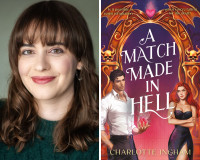
Charlotte Ingham on writing a slow burn romance
culturefly.co.uk – Wednesday September 10, 2025
The only thing I love more than reading a slow burn romance—one where I have to fling the book on the bed simply to scream, “Why is nobody kissing?”—is getting to write one instead. For me, the best tension comes from the almostmoments. Where the chemistry is so off-the-charts that you’re convinced something is finally, finally, about to happen, only for fate to intervene (or for the characters to be too completely, hopelessly, oblivious) and you’re left kicking your feet in simultaneous glee and frustration.
A Match Made in Hell allowed me to take this to another level, thanks to the lust trial. In order to escape Hell, Willow must complete seven tasks by resisting the seven deadly sins, but it’s particularly tricky when the person tempting her to give in to lust is the one person she’d love to give in to.
But one almost moment isn’t enough. For a slow burn to truly work, it has to be built up from lots of little almosts. As excited as I was to write that scene, I first had to lay the groundwork for that will-they-won’t-they moment, using both the earlier sin trials, along with the time they spend together in between, to allow their budding friendship to build into something more.
What Nobody Tells You About Rejections By Book Editors
medium.com – Wednesday August 27, 2025
Not long after I moved from the New York area to Alabama, I went to a bookstore event where I met a local writer who recently had failed to sell his first novel. He thought he knew why no publisher had bought it.
“New York editors don’t like books about the South,” he said.
I was incredulous, and not just because I’d met a lot of those editors while covering the publishing industry as a journalist.
Editors “don’t like books about the South”? Was the writer talking about the region that had produced William Faulkner, Flannery O’Connor, and Alice Walker?
Our conversation was taking place two hours south of Monroeville, Alabama, where Harper Lee and Truman Capote grew up. A famous resident of our town was Winston Groom, the author of Forrest Gump, a novel the bookstore displayed steps from where we stood. About 30 minutes away, the faculty of the University of South Alabama included the novelist Jesmyn Ward, who had won a National Book Award for her Salvage the Bones and would soon earn her second, making her the only woman and only black author to win that prize twice.
To my mind, all of that didn’t prove that “New York editors don’t like books about the South.” It proved — if anything — the opposite.
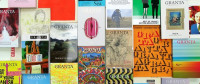
An Exclusive Look Inside the Essential Literary Magazine Granta
earlybirdbooks.com – Monday August 25, 2025
Granta magazine was founded in 1889 as The Granta, a student literary journal at Cambridge University. It published works by such great authors as A.A. Milne, Michael Frayn, Stevie Smith, Ted Hughes and Sylvia Plath.
In 1979, the magazine switched from being a student publication to the literary quarterly that it is today. Each issue includes the best authors discussing one aspect of daily life. Ten years later, Granta Books was founded as an imprint devoted to the same ideals as the original magazine: to publish, in the words of founder Bill Buford, “only writing we care passionately about.”
Granta has remained devoted to promoting new and fresh names in literature and to only publishing the highest quality writing. For an intimate, small press, Granta has an outsized number of prize winners, including 31 Nobel Prize laureates, and a huge cultural impact on the literary scene.

What Are the Best Writing Tools?
vocal.media – Monday August 25, 2025
Looking to write smarter, faster, and better? Whether you are a student, professional writer, content creator, or blogger, the right writing tools can make all the difference.
With so many online tools for writers available, it can be overwhelming to choose the best ones. This guide highlights the top free writing software, from brainstorming ideas to writing a perfect copy.
1. Brainstorming & Idea Generation Tools
Before a single word is written, ideas must be captured and shaped. These tools help with creativity and organization.
Evernote is like a digital notebook. You can create notes, add checklists, save web pages, attach images, or even record audio reminders. Writers often use it to collect story ideas, blog inspirations, or references they stumble upon during the day.
-
Best Features: Syncs across devices, allows tagging for organization, integrates with apps like Google Drive.
-
Why It’s Useful: Writers don’t always sit at a desk. If you think of a story idea while commuting, you can note it down and revisit later.
-
Best For: Journalists, bloggers, and students.
Indie Presses Provide a Haven for Midlist Authors
publishersweekly.com – Sunday August 24, 2025
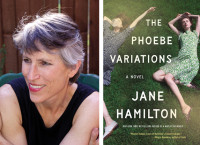
Independent literary publishing has a proud tradition of nurturing authors who’ve subsequently moved on to success at larger houses. Take Percival Everett, for instance, who published his fiction with Graywolf Press for decades before bringing his prize-winning breakout hit, James, to Doubleday.
But there’s a reverse trend that’s building steam: authors are moving away from corporate publishing to independent. While some are being turned away by the conglomerates that once published them, others say they are switching because they prefer the care and attention that indie presses provide.
Savvy authors and agents, Europa Editions publisher Michael Reynolds says, have long known that smaller publishers typically only put out books they feel strongly about, with the entire staff invested in their success, rather than books “being championed by one lone, intrepid, but increasingly powerless editor at an anonymous corporate imprint.” Europa, which published Elena Ferrante’s Neapolitan novels in the U.S., is one of many independent publishers who have welcomed the growing group of major house midlisters—and, in some case, marquee names—seeking asylum at smaller presses.

Author Rie Qudan: Why I used ChatGPT to write my prize-winning novel
theguardian.com – Monday August 18, 2025
“I don’t feel particularly unhappy about my work being used to train AI,” says Japanese novelist Rie Qudan. “Even if it is copied, I feel confident there’s a part of me that will remain, which nobody can copy.”
The 34-year old author is talking to me via Zoom from her home near Tokyo, ahead of the publication of the English-language translation of her fourth novel, Sympathy Tower Tokyo. The book attracted controversy in Japan when it won a prestigious prize, despite being partly written by ChatGPT.
The author speaks conversational English, but her translator, Jesse Kirkwood, is also on the line, interpreting questions and answers when needed. At the heart of Sympathy Tower Tokyo is a Japanese architect, Sara Machina, who has been commissioned to build a new tower to house convicted criminals. It will be a representation of what one character – not without irony – calls “the extraordinary broadmindedness of the Japanese people”, in that the tower will house offenders in compassionate comfort.
In the novel, Sara, herself a victim of violent crime, wonders if this sympathetic approach to criminals is appropriate. Does this sympathy reflect Japanese society in reality?
“It’s definitely prevalent,” says Qudan. One of the triggers for writing the novel, she adds, was the assassination of former prime minister Shinzo Abe in July 2022. “The person who shot him became the centre of a lot of attention in Japan – and his background elicited a lot of sympathy from people. He had grown up in a heavily religious household, and been deprived of freedom. That idea had been in my head for a long time, and when I came to write the novel, it came out again as part of the process.”
The question of public attitudes towards criminals runs through the story, in serious and satirical ways. Potential residents of the tower must take a “Sympathy Test” to determine if they are deserving of compassion (“Have your parents ever acted violently towards you? – Yes / No / Don’t know”) … and the ultimate decision will be made by AI.
Censorship from the other side of the aisle: New book considers publishing trends
as.cornell.edu – Wednesday August 13, 2025
As a new doctoral student at Cornell, Adam Szetela Ph.D. ’25 noticed an interesting trend in the book publishing world. Rather than criticism from people on the cultural right about the morals —or lack thereof — in current titles, authors and publishers were being slammed by folks on the cultural left, who were attacking books as racist or sexist, or questioning an author’s sensitivity.
“A lot of this is coming from a place of good faith,” Szetela said about the trend, which he writes about in “That Book Is Dangerous! How Moral Panic, Social Media, and the Culture Wars Are Remaking Publishing,” published Aug. 12 by the Massachusetts Institute of Technology Press and distributed by Penguin Random House. “But while the right is remaking the world in its image, the left is standing in a circular firing squad.”
Szetela said this new version of self-censorship is fueled by the vast reach of social media today.
Death of a publishing dream: how the Unbound revolution became untethered
observer.co.uk – Sunday August 10, 2025
The literary disrupters enjoyed great success with their crowdfunding model, signing authors that other publishers overlooked. And then the money ran out…
The revolution started in a small writer’s shed in 2011, amid the deck chairs, tents and bunting of the Hay festival, the highlight of the literary calendar. The talk was of shooting a rocket through the world of publishing.
Three friends – John Mitchinson, Justin Pollard and Dan Kieran – were launching a new company, one that they hoped would “democratise the book commissioning process”, with authors pitching their ideas directly to readers, who would choose whether or not to invest. Writers would crowdfund and profits would be split 50:50 between publisher and author – far more generous terms than the 10% royalties usually offered by others.
It would be author-led, author-first, the founders said. It would be a way for books that would otherwise be passed over by the old-school editors in traditional publishing houses to find their audience, and fly.
I’m a best-selling children’s author – this is how to write a good book for kids
inews.co.uk – Saturday August 9, 2025
When I meet someone new, the conversation often goes like this: “What do you do?” “I’m a children’s book writer.” “Oh, I have a great idea for a book… a toaster who wants to be a pop star!”
But despite what people think, it’s surprisingly difficult to write a good picture book. With a standard length of just 32 pages and around 1,000 words to play with, you must weave a satisfying story that is concise, engaging and entertaining enough for an audience who are forever tempted by one more episode of Bluey. How do you write a story that will stand out on a crowded bookshelf? Where do you even start?
My journey into children’s book writing was slightly accidental. When I graduated, I just knew I wanted to do “something creative”. Luckily, a supportive friend weighed in with a suggestion, presumably inspired by watching me spend the past three years knitting, painting and learning the ukulele rather than going to English lectures. “You’re basically a child – have you considered children’s book publishing?”
Get the free newsletter | Submit a news item or article | Get Writers' News for your website